From Square Footage to Strategic Asset: How US Operations Managers Are Transforming Warehouses to Capture Bulk Purchasing Gains
For many American businesses, the conversation about bulk purchasing begins and ends at the negotiating table. Volume discounts, supplier terms, and contract structures dominate the discussion — while a more fundamental constraint goes unaddressed. When a purchasing manager identifies an opportunity to buy six months of industrial fasteners, packaging film, or janitorial supplies at a 22 percent discount, the limiting factor is rarely the supplier's willingness. More often, it is the absence of a single straightforward question: where will we put it all?
Storage infrastructure, long treated as a passive line item in operational budgets, is increasingly being recognized as a direct lever on procurement economics. The businesses that are capturing the deepest bulk savings in 2025 are not necessarily those with the largest purchasing budgets — they are the ones that solved their storage constraints first.
The Hidden Cost of Capacity Constraints
When a business lacks adequate storage, it is forced into a reactive purchasing posture. Orders are placed frequently and in smaller quantities, eliminating access to volume pricing tiers. Shipping costs rise as consolidated freight opportunities are missed. And the administrative burden of processing a higher number of purchase orders compounds across procurement, accounts payable, and receiving departments.
According to supply chain consultants working with mid-market manufacturers across the Midwest and Southeast, companies that operate at or near their storage capacity routinely pay between 12 and 18 percent more for comparable goods than businesses with flexible warehousing headroom. That premium is not visible on any single invoice — but it accumulates steadily across a fiscal year.
The implication is significant: investments in storage infrastructure can generate returns that rival, and in some cases exceed, the savings achieved through supplier negotiations alone.
Modular Shelving and Vertical Space Utilization
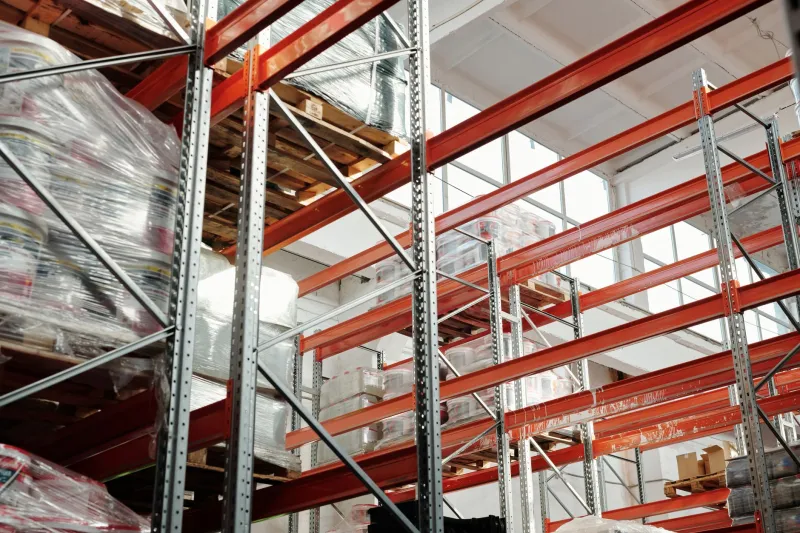
One of the most accessible entry points for operations managers looking to expand effective storage capacity is the reconfiguration of existing floor space. Many industrial facilities in the US were built or leased with horizontal storage in mind, leaving substantial vertical real estate underutilized.
Modular shelving systems — particularly high-density mobile shelving and vertical lift modules — allow businesses to dramatically increase storage density without expanding their physical footprint. A distribution center in Ohio that previously stored 4,000 SKUs across 18,000 square feet of conventional racking reported consolidating that inventory into 11,000 square feet after installing a combination of vertical carousels and adjustable-bay shelving. The freed space was repurposed as a dedicated bulk receiving zone, enabling the facility to accept full-pallet quantities of fast-moving consumables without disrupting daily operations.
The upfront investment in modular systems is not trivial, but the procurement savings generated by accessing volume pricing tiers frequently deliver a payback period of 18 to 30 months — a timeline that many operations managers find compelling when presented in CFO-ready terms.
Climate-Controlled Zones and Product Category Expansion
For businesses that purchase perishable or environmentally sensitive goods — including adhesives, lubricants, certain packaging materials, and food-grade supplies — the absence of climate-controlled storage has historically imposed hard limits on bulk purchasing. Products with specific temperature or humidity requirements cannot be stockpiled without appropriate infrastructure, regardless of how attractive the volume pricing may be.
A growing number of US manufacturers and distributors are addressing this constraint by installing modular climate-controlled zones within larger warehouse environments. These purpose-built enclosures, which can range from a few hundred to several thousand square feet, are significantly less expensive than constructing or leasing dedicated temperature-controlled facilities. They allow businesses to extend bulk purchasing strategies into product categories that were previously off-limits due to storage limitations.
A food processing equipment supplier in Texas, for example, expanded its bulk purchasing program to include specialty lubricants and food-safe cleaning compounds after installing a 1,200-square-foot climate zone within its existing warehouse. The company estimated annual savings of approximately $47,000 in the first year — derived almost entirely from accessing supplier pricing tiers that had been inaccessible under its previous storage model.
Third-Party Logistics as a Procurement Partnership
Not every business has the capital, space, or operational scale to justify building out proprietary storage infrastructure. For these organizations, third-party logistics providers — commonly referred to as 3PLs — offer a compelling alternative that reframes warehousing as a variable cost rather than a fixed one.
The strategic use of 3PL partnerships for bulk inventory storage is gaining traction among small and mid-sized US businesses that want to participate in volume purchasing programs without committing to long-term lease obligations or capital expenditures. Under these arrangements, a business purchases goods in bulk quantities to capture supplier discounts, then stores the inventory at a 3PL facility and draws it down on a just-in-time basis as operational needs dictate.
This model effectively decouples the purchasing decision from the storage constraint. A regional janitorial services company in the Pacific Northwest leveraged exactly this approach to purchase a full year's supply of commercial cleaning products at a negotiated bulk rate, storing the inventory at a 3PL hub in Portland and receiving weekly replenishment shipments to its service vehicles. The arrangement reduced its annual supply costs by 19 percent while eliminating the need for the company to maintain any centralized storage of its own.
Inventory Management Technology as the Connective Tissue
Transforming warehouse infrastructure into a procurement asset requires more than physical reorganization. Without accurate, real-time visibility into inventory levels, businesses risk over-purchasing, spoilage, and the operational chaos that can undermine the very savings they sought to capture.
Warehouse management systems (WMS) and inventory tracking platforms have become essential tools for operations managers pursuing bulk purchasing strategies. By integrating purchasing data with storage capacity metrics, these systems enable procurement teams to identify optimal reorder points, flag approaching capacity thresholds, and model the financial impact of potential bulk purchases before committing to orders.
Cloud-based WMS platforms, many of which are now accessible to mid-market businesses at subscription price points that would have been unimaginable a decade ago, have significantly lowered the barrier to this level of operational sophistication. The result is a tighter feedback loop between the warehouse floor and the purchasing desk — one that allows businesses to act quickly when supplier pricing windows open.
Positioning Storage as a Competitive Advantage
The businesses emerging as the most disciplined bulk buyers in the current environment share a common characteristic: they treat warehousing decisions as procurement decisions. Every square foot of storage capacity, every shelving configuration, and every 3PL partnership is evaluated not only on its operational merits but on its ability to unlock purchasing leverage.
This perspective shift — from viewing the warehouse as a cost center to recognizing it as a strategic enabler — is perhaps the most important conceptual move that operations managers can make. It aligns the interests of logistics, procurement, and finance around a shared objective: reducing the total landed cost of goods by removing the physical barriers that have historically forced businesses into expensive, small-lot purchasing patterns.
For US businesses navigating a procurement environment defined by supply chain volatility, inflationary pressure, and intensifying competition, the warehouse is no longer simply a place to store goods. It is, increasingly, a source of competitive advantage — and the organizations that recognize that reality earliest will be best positioned to capture the bulk savings their markets have to offer.