Stocking Up to Stand Out: How American Businesses Are Using Bulk Inventory as a Strategic Weapon
For decades, bulk purchasing was treated as a straightforward financial exercise — order more, pay less per unit, reduce overhead. That calculus still holds, but a growing segment of American businesses has begun treating wholesale procurement as something far more powerful: a proactive mechanism for outmaneuvering competitors, capturing market share during disruptions, and building operational resilience that no competitor can easily replicate.
The distinction matters. Reactive procurement keeps costs in check. Strategic procurement changes the game.
The Shift From Defensive to Offensive Buying
The supply chain turbulence of the early 2020s served as a forcing function for many US procurement teams. Businesses that had operated on lean, just-in-time inventory models found themselves unable to fulfill customer orders, meet production timelines, or respond to sudden demand spikes. Meanwhile, a smaller group of companies — those that had deliberately built deeper inventory reserves — stepped into the vacuum and gained customers, contracts, and credibility that persisted long after supply chains stabilized.
That experience crystallized a fundamental insight: inventory is not merely a cost center. Properly structured, it is a competitive asset.
Today, procurement leaders at manufacturing firms, distributors, and industrial suppliers across the country are formalizing what was once an informal advantage. They are building purchasing strategies around forward buying, tiered supplier agreements, and deliberate inventory positioning — not because it always produces the lowest unit cost in a given quarter, but because it produces the strongest competitive position over time.
Forward Buying: Timing the Market Without Speculating
Forward buying — the practice of purchasing inventory in advance of anticipated need, often at current or locked-in pricing — is one of the most powerful tools in a bulk buyer's arsenal. When executed with discipline, it allows businesses to insulate themselves from price volatility, currency fluctuations affecting imported goods, and supplier capacity constraints.
Consider a mid-sized US manufacturer that sources steel components. Rather than purchasing on a rolling monthly basis, a forward-buying strategy might involve securing a six-month supply at a negotiated rate when market indicators suggest prices are trending upward. If those projections prove accurate, the company has effectively transferred future savings into present-day margin — while simultaneously ensuring production continuity that competitors scrambling for spot-market supply cannot match.
The key distinction between forward buying and speculation is discipline. Effective forward buying is grounded in consumption data, demand forecasting, and supplier intelligence — not guesswork. Companies that invest in accurate forecasting infrastructure, whether through ERP systems, procurement analytics platforms, or close supplier relationships, are best positioned to execute this strategy without taking on undue inventory risk.
Inventory Positioning: Location and Liquidity in the Supply Chain
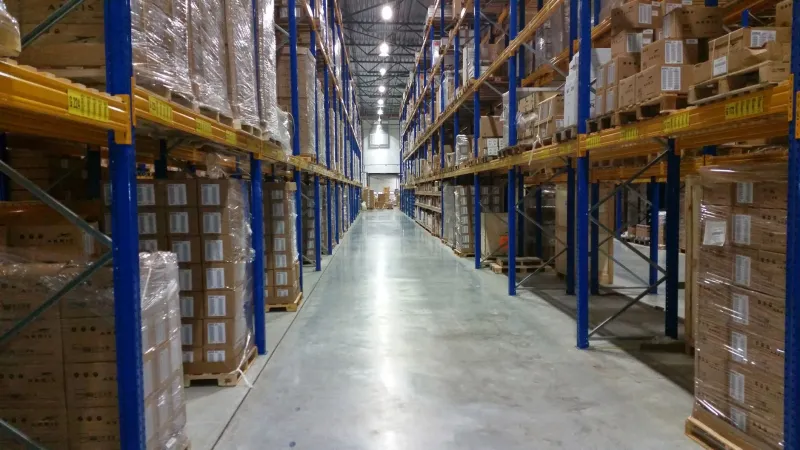
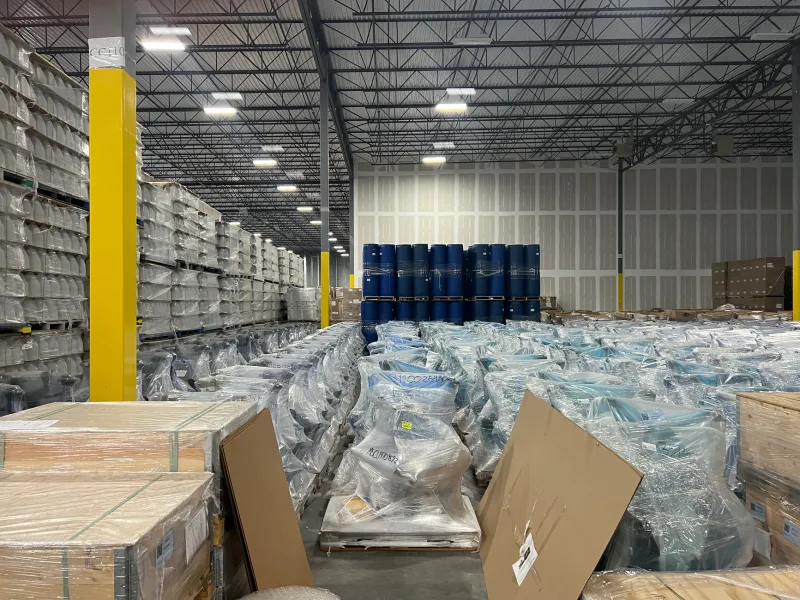
Where inventory sits is often as strategically significant as how much of it a business holds. Inventory positioning — the deliberate placement of stock across warehousing networks, regional distribution points, or third-party logistics facilities — determines how quickly a business can respond to demand shifts and how effectively it can serve customers in different geographies.
For US businesses operating across multiple states or serving regional industrial markets, this is particularly relevant. A distributor of electrical components with strategically positioned inventory across the Southeast, Midwest, and Mountain West can fulfill emergency orders for contractors and project managers within hours — a capability that translates directly into preferred vendor status and repeat business.
 Photo: Mountain West, via get.pxhere.com
Bulk purchasing enables this positioning in a way that unit-by-unit procurement simply cannot. By negotiating volume-based agreements that include flexible delivery schedules or vendor-managed inventory arrangements, businesses can maintain robust regional stock levels without tying up disproportionate capital in a single location.
Negotiating Volume-Based Supplier Agreements That Go Beyond Price
Most procurement professionals understand that volume commitments unlock better pricing. Fewer recognize that volume-based supplier agreements can deliver advantages that have nothing to do with the per-unit cost on the invoice.
Priority allocation during supply shortages is one such advantage. When a supplier faces constrained production capacity — due to raw material shortages, labor disruptions, or logistics bottlenecks — customers with long-term volume commitments are routinely prioritized over spot buyers. In a market where availability itself becomes a competitive differentiator, being at the front of a supplier's fulfillment queue can be worth considerably more than a modest per-unit discount.
Other negotiable terms worth pursuing in volume agreements include dedicated production runs, customized packaging or labeling, extended payment terms, and co-development opportunities for proprietary product variants. Each of these provisions deepens the supplier relationship and creates switching costs for competitors attempting to replicate the same arrangement.
US businesses that approach supplier negotiations with a long-term partnership mindset — rather than treating each negotiation as a transactional price battle — consistently extract more value from their procurement relationships.
Capitalizing on Competitor Disruptions
Perhaps the most underappreciated dimension of strategic bulk procurement is its ability to generate revenue opportunities during periods when competitors are constrained. Supply chain disruptions, port delays, raw material shortages, and sudden demand surges all create windows in which well-stocked businesses can capture customers, fulfill orders, and establish relationships that endure.
A wholesale distributor of personal protective equipment, for instance, that maintained deep inventory reserves heading into an unexpected regional demand surge would be positioned not only to serve its existing customer base but to onboard new accounts that competitors could not service. Those new accounts, once established, often become durable revenue streams.
This dynamic plays out across virtually every industrial and wholesale category — from fasteners and adhesives to packaging materials and MRO supplies. Businesses that treat inventory depth as a form of market readiness, rather than a carrying cost to be minimized, are consistently better positioned to capitalize on the disruptions that are an inevitable feature of complex supply chains.
Building the Infrastructure to Execute
Strategic bulk procurement does not happen by default. It requires investment in the systems, relationships, and internal capabilities that allow purchasing decisions to be made with confidence.
This includes maintaining accurate, real-time visibility into inventory levels and consumption rates; cultivating supplier relationships deep enough to provide early intelligence on capacity constraints or pricing shifts; and aligning procurement strategy with broader business objectives, including sales forecasts, production schedules, and customer commitments.
For many US businesses, particularly those in the small-to-mid-market segment, formalizing these capabilities represents a meaningful operational upgrade. The payoff, however, is a procurement function that generates competitive advantage rather than simply managing costs — a distinction that increasingly separates market leaders from the rest of the field.
At BulkBridge Supply, we work with businesses across the industrial and wholesale spectrum to identify the procurement structures, supplier agreements, and inventory strategies that move the needle. The bridge between a pallet of product and a genuine competitive position is shorter than many buyers realize — and it starts with the right strategic framework.