What Bulk Buyers Don't See on the Invoice: Uncovering the True Cost of Industrial Procurement

What Bulk Buyers Don't See on the Invoice: Uncovering the True Cost of Industrial Procurement
For procurement managers across American manufacturing, distribution, and construction sectors, bulk purchasing has long been positioned as the rational path to cost efficiency. Buy more, pay less — the logic appears self-evident. Yet a closer examination of wholesale industrial contracts reveals a more complicated reality: the savings advertised on a supplier's pricing sheet frequently bear little resemblance to what a business actually spends once all associated costs are tallied.
At BulkBridge Supply, we work with mid-market buyers every day who arrive having learned this lesson the hard way. The goal of this article is to name the cost traps plainly and arm procurement professionals with a structured approach to evaluating the genuine economic value of any bulk purchasing arrangement.
The Freight Surcharge Problem
Freight costs are perhaps the most common source of procurement sticker shock. Suppliers who advertise competitive per-unit pricing often offset their margins through a labyrinth of shipping-related fees that appear only at checkout — or worse, on the final invoice.
Common freight surcharges in industrial supply include:
- Fuel adjustment fees, which fluctuate with diesel index rates and are rarely disclosed upfront
- Liftgate and inside delivery charges, frequently applied to heavy industrial goods without prior notification
- Residential or limited-access surcharges, which can apply even to commercial addresses in rural or semi-rural zones common across the American Midwest and South
- Dimensional weight pricing, where carriers charge based on package volume rather than actual weight, inflating costs on bulky but lightweight goods like packaging foam or PPE kits
 Photo: American Midwest, via static.vecteezy.com
A procurement manager sourcing 5,000 units of industrial fasteners at a quoted price of $0.18 per unit may calculate a $900 order. Add a $75 fuel surcharge, a $40 liftgate fee, and dimensional weight penalties pushing freight from $120 to $210, and the effective per-unit cost climbs meaningfully — sometimes by 15 to 25 percent.
The fix: Always request a fully landed cost quote before committing. This means asking suppliers to itemize every freight-related fee based on your specific delivery address and shipment dimensions. At BulkBridge Supply, landed cost transparency is built into every quote — buyers see the complete picture before they commit.
Minimum Order Penalties and Quantity Lock-In
Many wholesale suppliers impose minimum order quantities (MOQs) that appear reasonable in isolation but create downstream problems for buyers who don't model their actual consumption rates carefully.
Consider a maintenance, repair, and operations (MRO) buyer at a mid-size Ohio manufacturer who agrees to a 12-month contract requiring quarterly purchases of 2,000 units of a particular lubricant. If production volumes shift — a common occurrence given recent supply chain volatility — the buyer may find themselves either paying for inventory they cannot use or incurring penalty fees for failing to meet volume commitments.
MOQ structures also create a subtler trap: they push buyers toward ordering more than they need simply to unlock a better price tier, increasing carrying costs in the process.
The fix: Before agreeing to any volume-based pricing structure, calculate your realistic consumption rate over the contract period and stress-test it against a 20 percent reduction scenario. Negotiate for flexible rescheduling provisions or reduced-penalty exit clauses. BulkBridge Supply offers tiered pricing without rigid commitment penalties, allowing buyers to scale orders in alignment with actual operational demand.
Warehousing and Inventory Carrying Costs
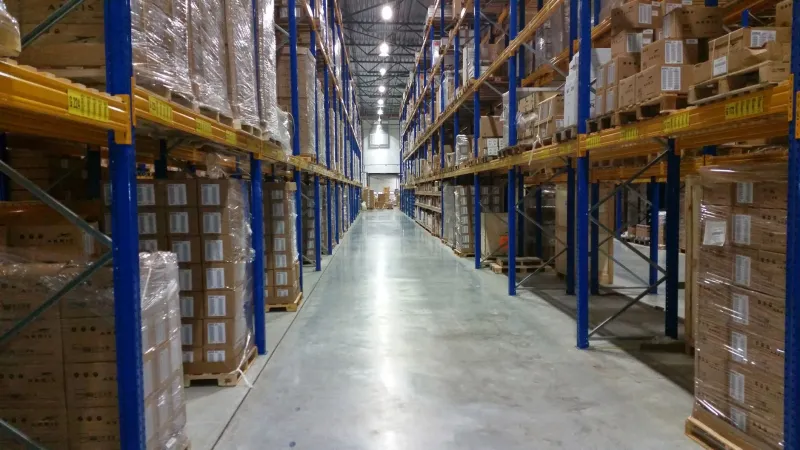
The savings from buying in bulk can evaporate entirely when storage costs are factored into the equation. Many procurement analyses focus exclusively on the purchase price and freight, ignoring the ongoing expense of holding inventory.
Industry benchmarks suggest that annual inventory carrying costs typically range from 20 to 30 percent of the inventory's value, when accounting for:
- Warehouse space (leased or allocated)
- Insurance on stored goods
- Inventory management labor
- Obsolescence risk (particularly acute for electronics, chemicals, and time-sensitive consumables)
- Capital opportunity cost — the return foregone by tying cash up in stock
A Texas-based packaging operation that purchases a six-month supply of stretch film to capture a 12 percent bulk discount may find that carrying costs over that same period consume 15 percent of the inventory's value. The net savings drop to near zero, or turn negative once labor and space are included.
The fix: Apply the Economic Order Quantity (EOQ) model as a baseline calculation before committing to large bulk orders. EOQ balances the cost of ordering (including freight and processing) against carrying costs to identify the optimal purchase volume. For buyers who lack in-house analytical capacity, BulkBridge Supply's procurement team can assist with EOQ modeling as part of our buyer consultation services.
Quality Inconsistency Across Bulk Lots
A less-discussed but financially significant risk in wholesale industrial purchasing is lot-to-lot quality variation. Suppliers operating at high volume sometimes source from multiple manufacturing runs, resulting in subtle but meaningful differences in product specifications — variations in tensile strength, chemical composition, dimensional tolerances, or PPE certification compliance.
For buyers in regulated industries — aerospace supply chain, food processing, pharmaceutical manufacturing — these inconsistencies can trigger compliance failures, production downtime, or costly rework. The savings on a bulk PPE order become irrelevant if a OSHA audit reveals that a portion of the lot fails to meet ANSI/ISEA standards.
The fix: Request Certificates of Conformance (CoC) and, where applicable, third-party test reports for each lot. Establish incoming quality control sampling protocols, particularly for safety-critical items. BulkBridge Supply maintains documented supplier qualification standards and provides CoC documentation as standard practice for applicable product categories.
Building a Total Cost of Ownership Framework
To move beyond invoice-level thinking, procurement managers should adopt a structured Total Cost of Ownership (TCO) model for bulk purchasing decisions. A practical TCO calculation should include:
- Unit purchase price at the quoted MOQ
- Fully landed freight cost (including all surcharges)
- Annual carrying cost (apply 20–25% of inventory value as a conservative estimate)
- Quality inspection and compliance costs
- Contract risk premium (penalty exposure for volume shortfalls)
- Administrative burden (time spent managing supplier relationships, resolving disputes)
When these factors are aggregated, the supplier with the lowest advertised unit price is often not the lowest-cost supplier in practice. Transparent pricing, flexible terms, and reliable quality documentation frequently deliver superior TCO — even when the headline price is modestly higher.
Why Transparency Is a Competitive Advantage
The industrial supply market has historically operated with a degree of pricing opacity that benefits suppliers far more than buyers. Ambiguous freight policies, complex tiered pricing structures, and buried contract terms are not accidental — they are structural features of a market where information asymmetry has long favored the seller.
BulkBridge Supply was built on a different premise: that buyers who have complete cost information make better decisions, build stronger supplier relationships, and ultimately generate more sustainable purchasing volume. Our platform surfaces the total cost of every transaction — not just the per-unit price — because we believe that informed buyers are loyal buyers.
For US procurement managers navigating the complexity of industrial wholesale, the most valuable tool available is not a lower price. It is a complete picture of what that price actually costs.