Cutting Out the Middleman: How American Manufacturers Are Rewriting the Rules of Industrial Sourcing
For decades, the American industrial distribution model operated on a premise that most buyers accepted without serious scrutiny: that the value added by a regional distributor — local inventory, technical support, credit terms, and relationship management — justified the margin layer those distributors built into every transaction.
That premise is now under sustained pressure. And the manufacturers doing the questioning are not fringe operators experimenting with unproven alternatives. They are mid-market production facilities, fabrication shops, food processors, and industrial service companies across the country — businesses with $10 million to $200 million in annual revenue, procurement teams of one to ten people, and a growing appetite for supply chain arrangements that actually serve their interests.
The shift toward direct wholesale procurement is not a trend driven by a single factor. It is the convergence of several forces that have been building for years and crystallized during one of the most disruptive periods in modern supply chain history.
The Disruption That Changed Everything
The supply chain crises of 2020 through 2023 exposed a structural vulnerability that many American manufacturers had long suspected but rarely articulated: their dependence on intermediary distribution layers created fragility, not resilience.
When regional distributors ran out of stock — PPE, fasteners, electronic components, packaging materials — buyers discovered that their suppliers' suppliers were frequently overseas manufacturers with whom they had no direct relationship, no visibility into lead times, and no leverage to prioritize allocation. The distributor, in many cases, was not adding value during the crisis. It was simply a bottleneck.
According to a 2023 report from the National Association of Manufacturers, 78 percent of US manufacturers reported supply chain disruptions as a top operational concern, and a majority indicated plans to diversify their sourcing strategies in response. Among mid-market operators specifically, that diversification has increasingly meant establishing direct procurement relationships — with manufacturers, importers, and wholesale marketplace platforms — that eliminate at least one layer of intermediary dependency.
"We spent three months in 2021 unable to source basic MRO supplies through our traditional distributors," recounts a procurement director at a mid-size metal fabrication company in the greater Detroit area. "We started going direct out of desperation. Once we saw the pricing and the lead times, we never fully went back."
The Margin Math That No Longer Adds Up
Traditional industrial distributors typically operate on gross margins of 20 to 35 percent, depending on product category and competitive intensity. For commodity industrial supplies — fasteners, PPE, abrasives, packaging, janitorial products — that margin represents a direct cost to the buyer with increasingly questionable justification.
The justification has historically rested on three pillars: local inventory availability, technical expertise, and account management. Each of these pillars has eroded meaningfully over the past decade.
Local inventory availability matters less when reliable direct-to-facility freight networks can deliver consolidated wholesale orders in two to five business days. Technical expertise — once a genuine differentiator for complex industrial products — has migrated to manufacturer websites, digital specification tools, and online procurement platforms that surface detailed product data without requiring a sales call. And account management, valued when relationship-based business was the norm, feels increasingly anachronistic to a generation of procurement professionals who prefer digital self-service.
"The value proposition of the traditional distributor was built for a world where information was scarce and logistics were slow," observes a supply chain consultant who works primarily with Midwestern manufacturing clients. "In 2025, information is abundant and logistics are fast. The margin that used to buy you something now often buys you very little."
The Digital B2B Platform as Catalyst
The emergence of purpose-built B2B wholesale procurement platforms has provided the infrastructure that makes distributor bypass operationally viable for mid-market buyers who lack the purchasing scale of Fortune 500 companies.
Large enterprises have long maintained direct supplier relationships — they have the volume to justify dedicated account teams and the logistics infrastructure to manage complex supply arrangements. The mid-market operator buying $2 million in industrial supplies annually historically lacked both the leverage and the operational capacity to go direct at scale.
Platforms like BulkBridge Supply change that calculus. By aggregating demand across thousands of mid-market buyers and maintaining direct sourcing relationships with manufacturers and importers, these platforms deliver wholesale pricing tiers previously accessible only to the largest industrial operators — without requiring buyers to manage dozens of individual supplier relationships.
The digital interface further reduces friction. A procurement manager at a North Carolina textile manufacturer can browse, compare, configure, and order a six-month supply of industrial cleaning chemicals, PPE, and packaging materials in a single session — receiving a transparent landed-cost quote before committing — without a single sales call.
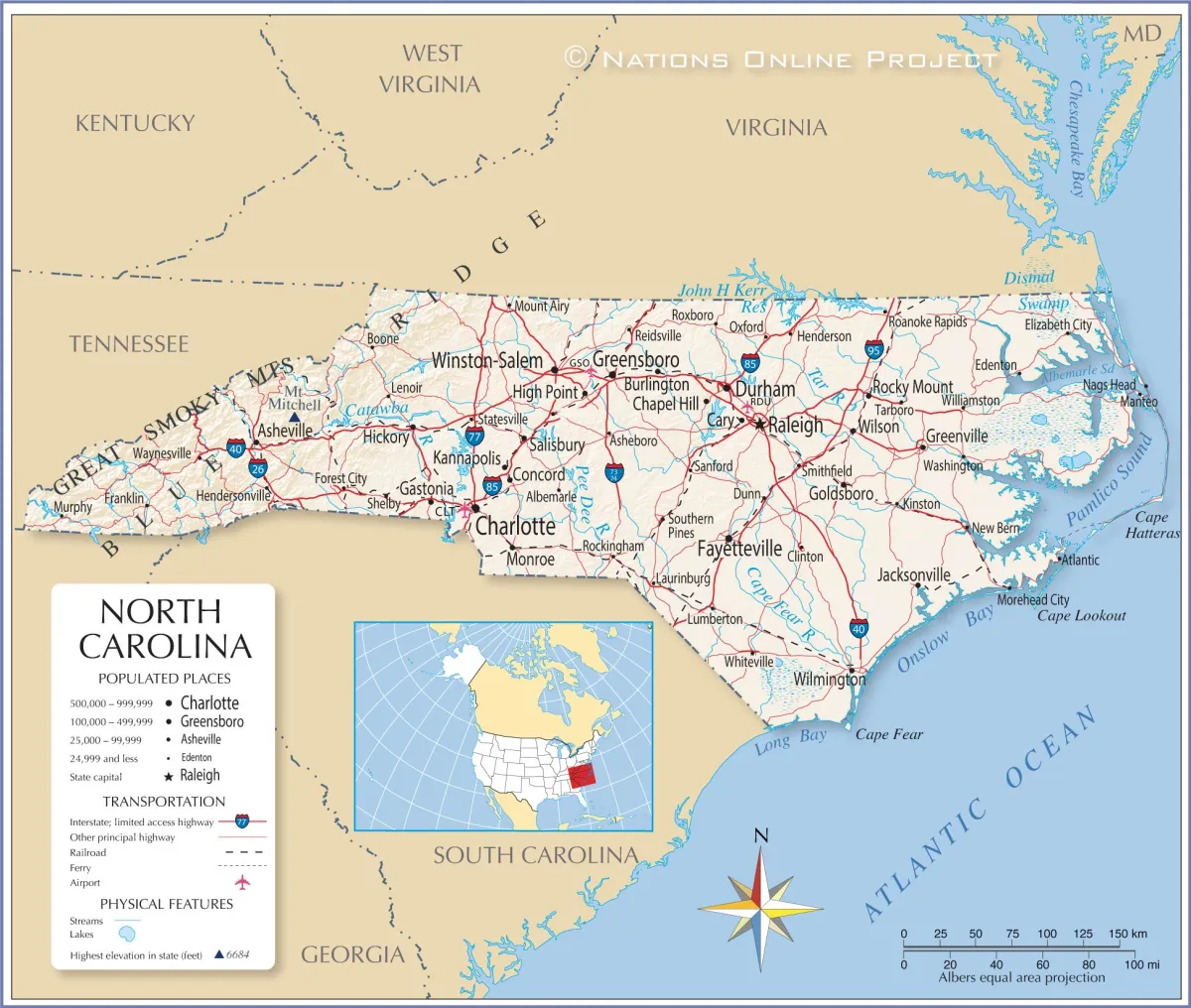 Photo: North Carolina, via www.nationsonline.org
Voices From the Shop Floor
The transition is playing out differently across sectors, but the underlying motivation is remarkably consistent.
In food processing, where FSMA compliance requirements demand rigorous documentation of supply chain inputs, several mid-size operators have moved to direct wholesale procurement specifically to gain better visibility into product provenance and certification documentation. "Our distributor couldn't always tell us exactly where a product came from or provide current SDS documentation quickly," notes a quality assurance manager at a Midwestern food ingredient processor. "Direct sourcing gives us that control."
In construction and industrial contracting, the driver is more straightforwardly financial. General contractors and specialty subcontractors operating on thin margins have found that shifting PPE, safety signage, and consumable procurement to direct wholesale channels recovers two to four margin points that can meaningfully affect project profitability.
In automotive parts manufacturing — a sector under relentless cost pressure from OEM customers — the conversation is about supply chain resilience as much as cost. "We want fewer links in the chain," explains a purchasing manager at a Tier 2 auto supplier in Ohio. "Every intermediary is a point of failure. We've been systematically removing them where we can."
What Traditional Distributors Risk Losing
It would be an overstatement to declare the industrial distributor model obsolete. For highly technical, specification-intensive product categories — specialty chemicals, precision instrumentation, custom-engineered components — the distributor's technical expertise and application knowledge retain genuine value. The distributor relationship also offers credit terms and local emergency stock that direct platforms cannot always replicate.
But for the broad category of commodity industrial supplies — PPE, MRO consumables, packaging, janitorial, safety products — the traditional distributor's position is structurally weakening. The margin they charge is no longer invisible, the alternatives are no longer operationally inconvenient, and the buyers making procurement decisions are increasingly digital natives who evaluate suppliers the same way they evaluate any other business tool: on performance, transparency, and total cost.
The Road Ahead for American Industrial Procurement
The disintermediation of industrial supply chains is not a sudden disruption. It is a gradual, accelerating structural shift driven by information access, logistics maturation, and the lived experience of buyers who survived supply chain crises by going around their traditional partners.
For US mid-market manufacturers and industrial operators, the practical implication is straightforward: the tools now exist to source the majority of commodity industrial supplies directly, at wholesale pricing, with full cost transparency and without the operational complexity that once made distributor dependence the path of least resistance.
BulkBridge Supply was built precisely for this moment — to serve as the direct procurement bridge between American mid-market buyers and the wholesale supply sources that have historically been accessible only to larger operators. The middleman is not disappearing overnight. But for an increasing number of American manufacturers, the question is no longer whether to bypass the traditional distribution layer — it is simply a matter of how quickly to make the transition.