The Internal Disconnect: Fixing the Communication Failures That Quietly Destroy Bulk Purchasing ROI
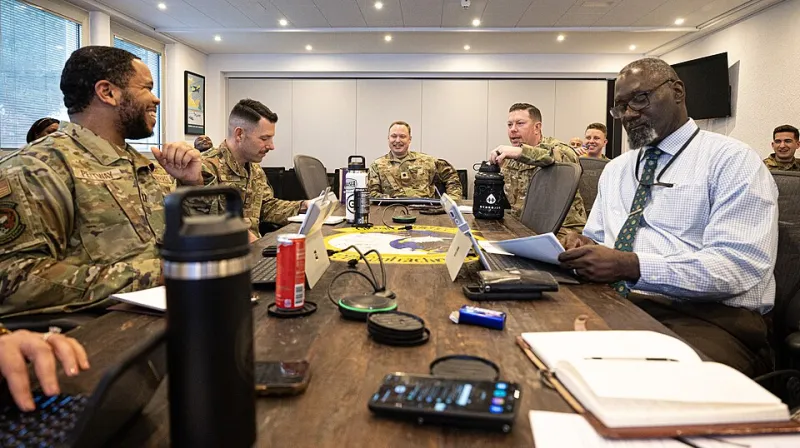
Photo: U.S. Air Force photo by Senior Airman Thomas Karol, Public domain, via Wikimedia Commons
The case for bulk purchasing typically gets made—and evaluated—at the procurement level. Cost-per-unit comparisons, supplier negotiations, volume thresholds, and payment terms are analyzed, approved, and executed by teams whose primary frame of reference is the invoice. What happens after the purchase order is issued, however, is a different organizational story—and it is frequently a less successful one.
Across US wholesale distribution, manufacturing, and industrial supply operations, a recurring pattern emerges: procurement teams secure genuinely favorable volume pricing, only to find that the operational benefits anticipated at the time of purchase are diluted, delayed, or entirely absent by the time the inventory is in use. The culprit is rarely the supplier. More often, it is the gap between what procurement understood about operational needs and what operations actually required.
Where the Breakdown Begins
The most common friction point is deceptively simple: procurement and operations are working from different information sets, and no reliable mechanism exists to reconcile them before large purchasing decisions are made.
Procurement teams, particularly in mid-sized US operations, are often evaluated on cost reduction metrics. Their incentive structure rewards favorable pricing outcomes. Operations and warehouse teams, by contrast, are evaluated on throughput, fill rates, and space utilization. Their concerns are practical and immediate—where will this inventory be stored, does it arrive in the right configuration for our processes, and does the timing of delivery align with our production schedule?
When these two sets of priorities are not explicitly coordinated before a bulk commitment is finalized, the result is predictable: procurement celebrates a pricing win while operations absorbs an operational burden that was never accounted for in the original analysis.
Common Scenarios Where Misalignment Creates Real Costs
The consequences of this disconnect manifest in several recognizable patterns.
Specification drift. Procurement secures a favorable price on a product specification that was accurate at the time of initial sourcing but has since been modified by engineering or production. Without a formal review loop, the bulk order arrives to specifications that no longer match current operational requirements. Rework, returns, or forced substitution follow—each carrying costs that can easily exceed the original discount.
Storage configuration mismatch. A bulk order is received in pallet configurations or packaging formats that are incompatible with the receiving facility's racking system or material handling equipment. Labor costs spike as warehouse staff manually reconfigure product, and the efficiency gains anticipated from the volume purchase evaporate.
Timing disconnects. Procurement locks in a delivery schedule based on supplier availability and pricing windows without coordinating with operations on incoming capacity. The result is a receiving dock overwhelmed during a period of peak activity, or inventory arriving before the storage space is available to accommodate it.
Demand signal lag. Operations staff observe early indicators of changing consumption patterns—slower product movement, increasing returns, feedback from sales—but have no established channel to communicate these signals to procurement before the next large order is placed. By the time the information reaches the purchasing decision, the commitment has already been made.
The Organizational Infrastructure That Prevents These Failures
Addressing these problems is fundamentally a matter of building communication infrastructure, not simply improving interpersonal relationships or holding more meetings. Sustainable solutions require structural changes to how information flows between procurement and operations.
Cross-functional review before commitment. High-value bulk purchasing decisions should require documented sign-off from both procurement and operations leadership before finalization. This is not a bureaucratic delay—it is a quality control step that surfaces misalignments when they are still addressable. A two-page summary shared between teams, covering delivery timing, storage requirements, specification confirmation, and anticipated consumption rate, is often sufficient to catch the most common disconnect points.
Shared demand visibility. Procurement teams benefit from access to real-time or near-real-time consumption data from warehouse management systems. When procurement can see how quickly existing inventory is moving, their volume projections become significantly more accurate. Many US operations already have this data captured in their systems; the gap is simply that it is not routinely shared across departments.
A structured feedback loop after delivery. Within 30 to 60 days of a large bulk order's arrival, a brief cross-functional review—whether a short meeting or a shared written summary—should document whether the purchase delivered its anticipated operational value. Were specifications correct? Was storage manageable? Did the delivery timing align with capacity? This post-delivery review creates institutional memory that improves future purchasing decisions and signals to operations teams that their experience is considered relevant input.
Designated liaison roles. In larger operations, assigning a specific individual to serve as a liaison between procurement and warehouse or production functions—even as a part-time responsibility—dramatically reduces the information delays that lead to misaligned decisions. This person's primary function is to ensure that operational context reaches procurement before commitments are made, and that operational teams understand the constraints and objectives driving procurement decisions.
Why This Problem Is Growing More Acute
The communication gap between procurement and operations is not a new phenomenon, but several current trends are making it more consequential.
As bulk order sizes increase to capture deeper pricing tiers, the cost of a misaligned purchase grows proportionally. A specification error on a 500-unit order is a manageable problem; the same error on a 5,000-unit commitment is a serious financial event.
Supply chain complexity has also increased the pace at which product specifications, storage requirements, and demand patterns change. Operations environments that were relatively stable three to five years ago are now more dynamic, and the information that procurement needs to make sound bulk decisions is changing more rapidly than traditional communication cadences can accommodate.
Finally, the growth of hybrid work arrangements in many US office environments has, in some cases, reduced the informal information-sharing that once occurred naturally between departments. Deliberate communication infrastructure is increasingly necessary to replace what proximity once provided organically.
The Organizational Dividend of Getting This Right
Operations that invest in closing the procurement-to-operations communication gap do not simply avoid the costs described above. They also unlock a compounding advantage: as procurement decisions become more accurately informed by operational reality, the actual ROI of bulk purchasing improves—not because better prices are secured, but because the purchases made are more precisely aligned with genuine operational needs.
The result is an organization where volume purchasing delivers the full value that its economics promise, rather than a partial return degraded by avoidable internal friction.