Beyond the Bulk Order: How US Wholesalers Are Converting Volume Relationships Into Private Label Profit Centers
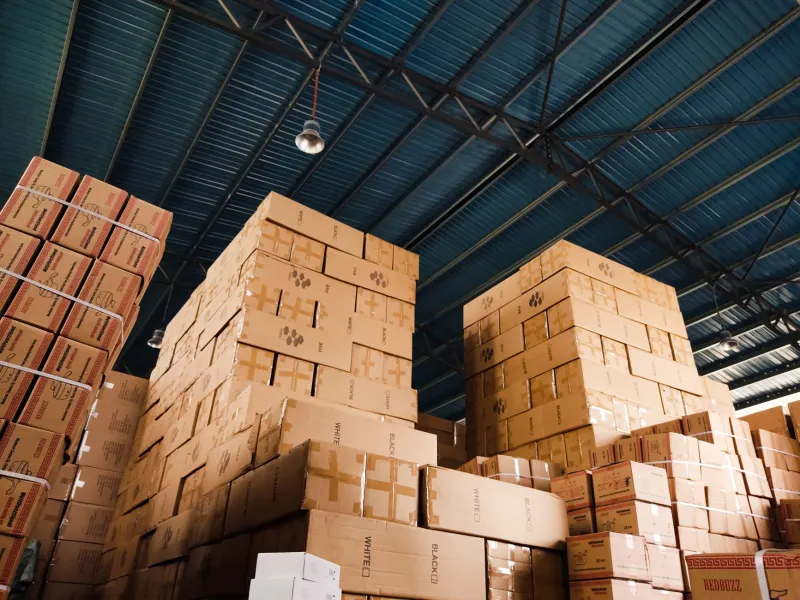
For years, the prevailing logic in wholesale procurement has been straightforward: buy more, pay less, sell the difference. And while that model continues to deliver value, a growing segment of US distributors and resellers is discovering that volume relationships can yield something far more durable than a favorable unit price. They are discovering the private label opportunity.
Private labeling — the practice of sourcing manufactured goods and bringing them to market under a proprietary brand name — is not new. Retail giants have used it for decades. What is new is the accessibility of this model for mid-sized American wholesalers who already possess the one asset manufacturers care most about: consistent, high-volume purchase commitments.
If your business is already placing substantial orders with domestic or international suppliers, the infrastructure for a private label program may be closer than you think.
Why Manufacturers Welcome the Conversation
Manufacturers operating at scale face a persistent challenge: keeping production lines running at optimal capacity. A buyer who commits to large, predictable orders solves a real operational problem for them. Private label arrangements, from a manufacturer's perspective, often require minimal retooling — in many categories, the primary change involves packaging, labeling, and documentation rather than any modification to the product itself.
This dynamic gives volume buyers meaningful negotiating leverage. When you approach a manufacturer with a credible purchase history and a clear projection of ongoing demand, the conversation shifts from "can you accommodate us" to "what do we need to formalize this arrangement." Manufacturers in categories ranging from cleaning and janitorial supplies to safety equipment, fasteners, lubricants, and packaging materials are frequently open to these discussions — provided the volume thresholds justify the administrative overhead on their end.
Understanding Minimum Volume Thresholds
The first practical question any wholesaler must answer before pursuing private labeling is whether their current or projected order volume meets the manufacturer's requirements for a branded program. These thresholds vary considerably by category and supplier.
In general terms, commodity-adjacent categories — think disposable gloves, cleaning chemicals, or basic hardware — tend to have lower private label entry points because the product itself requires little customization. Specialty or engineered products carry higher thresholds because the cost of maintaining separate SKUs, documentation, and inventory allocation is more significant for the manufacturer.
A reasonable starting benchmark for US mid-market buyers is an annual purchase commitment in the range of $150,000 to $500,000 per SKU or product line, though this figure should be treated as directional rather than definitive. The most productive approach is to initiate the conversation with your existing supplier contacts and ask directly what volume commitment would unlock a private label discussion. Many procurement professionals are surprised to learn that their current spend already qualifies.
Packaging and Labeling Negotiations
Once volume thresholds are established, packaging becomes the central negotiation. This is where brand identity is built and where cost implications can vary significantly.
At minimum, a private label arrangement will require custom labeling — your company name, logo, product name, and any required regulatory or safety information. In most cases, manufacturers can apply custom labels to existing packaging formats without significant tooling costs. This is the most accessible entry point and is appropriate for businesses testing the model before committing to deeper investment.
More sophisticated arrangements involve custom packaging design — proprietary containers, box formats, color schemes, or branded inserts. These options carry higher upfront costs but deliver stronger shelf differentiation and brand recognition, particularly for businesses selling through e-commerce channels or to end customers who interact directly with the product packaging.
When negotiating packaging terms, buyers should clarify who bears the cost of label design and production, what minimum print runs apply, how packaging inventory is managed, and what lead times are required for label changes. These details have direct implications for cash flow and operational flexibility, and they are worth resolving in writing before the first branded order ships.
Intellectual Property Fundamentals for New Brand Owners
Entering private labeling also means entering the world of brand ownership, which carries intellectual property considerations that many wholesale buyers encounter for the first time. At a minimum, businesses launching a private label line should pursue federal trademark registration for their brand name and logo through the United States Patent and Trademark Office. This provides legal protection against unauthorized use and is a prerequisite for selling on major e-commerce platforms under brand registry programs.
Beyond trademark, buyers should ensure that their supply agreements include clear provisions governing exclusivity, if applicable, and ownership of any custom formulations, designs, or specifications developed in collaboration with the manufacturer. Without explicit contractual language, the default assumption in many supplier relationships is that the manufacturer retains the right to sell similar or identical products to other buyers — potentially including your competitors.
Engaging a commercial attorney with experience in supply agreements and brand licensing is a worthwhile investment at this stage. The cost of establishing clean IP documentation upfront is substantially lower than the cost of resolving disputes after a branded product line has gained market traction.
Categories Where Private Labeling Delivers the Strongest Returns
Not all product categories are equally well-suited to private labeling at the wholesale level. The most accessible and profitable opportunities for US mid-market distributors tend to share a few characteristics: high repurchase frequency, limited technical differentiation between competing products, and strong price sensitivity among end buyers.
Janitorial and facility maintenance supplies — including cleaning concentrates, paper products, and waste management consumables — represent one of the most accessible entry points. Margins on branded janitorial products are often significant relative to the underlying commodity cost, and facility managers tend to reorder consistently once a product is integrated into their operations.
Safety and personal protective equipment — including gloves, eyewear, high-visibility apparel, and respiratory protection — is another category where private labeling is well-established. Compliance-driven purchasing in industries such as construction, manufacturing, and logistics creates reliable demand, and the ability to offer a branded safety line can strengthen a distributor's positioning with large commercial accounts.
Packaging and shipping materials — including poly bags, stretch film, corrugated boxes, and void fill — are consumed in high volumes by e-commerce operators and manufacturers alike. Private labeling in this category is particularly straightforward because the product itself requires no regulatory documentation beyond standard labeling.
Industrial lubricants and maintenance chemicals — including degreasers, penetrating oils, and rust inhibitors — offer strong margin potential and benefit from the perception of proprietary formulation, even when the underlying chemistry is relatively standard.
Making the Transition Strategically
The move from generic bulk buyer to private label brand owner is not a single transaction — it is a strategic repositioning that unfolds over time. The most successful transitions begin with a single product category where the buyer has deep market knowledge, strong supplier relationships, and a clear sense of the end customer's needs.
From that foundation, the program can expand methodically, with each new SKU informed by the lessons of the last. Businesses that approach private labeling as a deliberate, margin-focused strategy — rather than a branding exercise — consistently report that the investment in volume commitment, packaging development, and IP protection delivers returns that generic procurement simply cannot match.
For US wholesalers and distributors already operating at scale, the infrastructure is largely in place. The question is whether the organization is prepared to treat its supplier relationships as the strategic asset they have already become.