Never Run Dry: How Automated Replenishment Triggers Are Redefining Inventory Discipline for US Wholesale Buyers
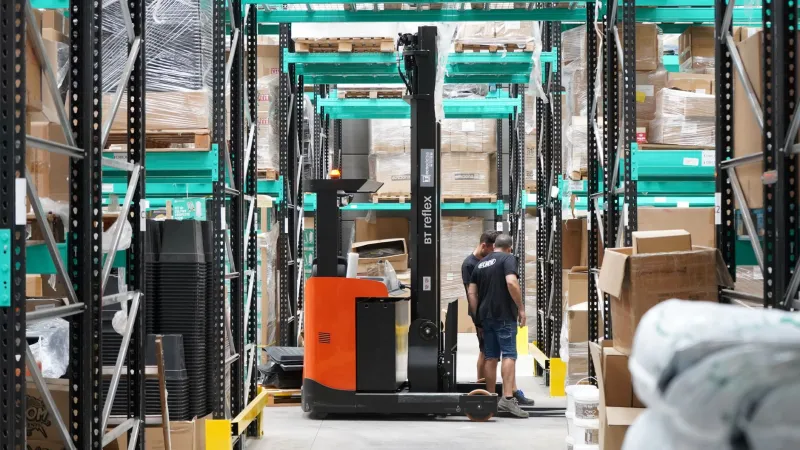
For decades, the reorder decision at most US wholesale and industrial supply operations followed a familiar rhythm: a warehouse manager walks the floor, eyeballs the shelving, checks a clipboard, and places a call to the supplier. At smaller volumes, this system is imperfect but workable. At scale — managing hundreds or thousands of bulk SKUs across multiple storage locations — it becomes a liability.
The consequences are well documented. Stockouts erode customer relationships and force expensive emergency sourcing. Overstocking ties up working capital and inflates carrying costs. Both outcomes are largely preventable, yet they persist at organizations that continue to rely on manual judgment for replenishment timing. That is beginning to change.
Across the US wholesale and industrial distribution landscape, operators are adopting automated replenishment systems that replace intuition with data-driven triggers. The shift is not limited to large enterprises with dedicated IT departments. Mid-market buyers — firms managing anywhere from $5 million to $100 million in annual procurement — are increasingly finding these tools accessible, affordable, and essential to remaining competitive.
What a Reorder Point Actually Measures
Before examining the technology, it is worth clarifying the underlying concept. A reorder point (ROP) is the inventory level at which a new purchase order should be initiated to replenish stock before it reaches zero. In its simplest form, the formula is straightforward:
Reorder Point = (Average Daily Usage × Supplier Lead Time) + Safety Stock
Each variable carries significant weight. Average daily usage must reflect actual consumption patterns, not estimates from a prior quarter. Supplier lead time must account for real-world variability — not the best-case scenario printed on a vendor's spec sheet. Safety stock represents the buffer held to absorb demand spikes or delivery delays without triggering a stockout.
When calculated accurately and updated continuously, this formula produces a trigger point that is neither too early (resulting in excess inventory) nor too late (resulting in a gap in supply). The challenge, historically, has been that recalculating these variables manually across a large SKU catalog is impractical. Automated systems solve that problem by doing the math continuously, in the background, without human intervention.
From Static Thresholds to Dynamic Intelligence
Early inventory management software allowed operators to set fixed reorder points — a static number that triggered a purchase order when stock fell below a predetermined level. This was an improvement over pure intuition, but it introduced its own inefficiencies. A threshold set in January may be wholly inappropriate by August if seasonal demand has shifted, a supplier's lead time has lengthened, or a new customer account has increased average daily consumption.
Modern automated replenishment platforms address this limitation by making reorder points dynamic. Rather than relying on a number entered by a buyer six months ago, these systems pull live data from multiple sources: point-of-sale or order management systems, supplier portals that report current lead times, and demand forecasting engines that identify trends and seasonal patterns. The reorder point adjusts automatically as conditions change.
For bulk SKUs — where a single purchase order may represent tens of thousands of dollars in inventory — this dynamic responsiveness is particularly valuable. The difference between a reorder point calibrated to a 12-day lead time and one calibrated to an 18-day lead time can mean the difference between seamless fulfillment and a two-week stockout.
Platforms Making This Accessible to Mid-Market Operators
Until relatively recently, sophisticated replenishment automation was the exclusive domain of large distributors and manufacturers with enterprise resource planning (ERP) systems running six-figure implementation projects. That barrier has largely dissolved.
Several platforms now offer automated replenishment functionality at price points and implementation timelines suited to mid-market operations. Inventory management solutions such as Cin7, Fishbowl, and inFlow have introduced replenishment automation features that integrate with common accounting and e-commerce platforms. Cloud-based ERP providers including NetSuite and Acumatica offer more comprehensive environments for operators managing complex, multi-location inventory.
For businesses already operating within major procurement ecosystems, additional tools are available. Some suppliers and B2B marketplaces now offer vendor-managed inventory (VMI) arrangements, in which the supplier itself monitors stock levels and initiates replenishment shipments when thresholds are reached — removing the buyer from the trigger process entirely.
The common thread across these platforms is integration. Automated replenishment works best when inventory data, order data, and supplier data flow freely between systems. Organizations that have historically managed these functions in silos — inventory in one spreadsheet, purchase orders in another, supplier communications in email — will need to invest in integration before automation can deliver its full value.
Measuring the Impact: Stockout Rates and Carrying Costs
The business case for automated replenishment rests on two primary metrics: stockout rate reduction and carrying cost optimization.
Stockout rates, expressed as the percentage of order lines that cannot be fulfilled from available inventory, are a direct measure of supply chain reliability. Industry benchmarks vary by sector, but even a modest reduction — moving from a 4% stockout rate to a 1.5% rate — can have an outsized impact on customer retention and revenue. In wholesale distribution, where buyers often have multiple supplier options, a stockout is not merely an inconvenience; it is an invitation to evaluate a competitor.
Carrying costs — the total expense of holding inventory, including storage, insurance, handling, and the opportunity cost of tied-up capital — typically run between 20% and 30% of inventory value annually for US distributors. Automated replenishment reduces carrying costs by preventing the accumulation of excess stock that results from over-ordering. When reorder quantities are calibrated to actual demand rather than conservative estimates inflated by uncertainty, inventory levels normalize closer to optimal.
Organizations that have implemented automated replenishment systems report measurable improvements on both dimensions. While results vary based on the complexity of the SKU catalog and the quality of data feeding the system, reductions in stockout incidents of 40% to 60% are commonly cited, alongside carrying cost improvements in the range of 10% to 20%.
Building the Foundation Before Flipping the Switch
Automation amplifies the quality of the data it receives. An organization with inaccurate inventory counts, unreliable supplier lead time data, or poorly segmented demand history will find that automated replenishment produces unreliable triggers — potentially faster and at greater scale than the manual process it replaced.
Before implementing automated replenishment, wholesale buyers should conduct a data audit. Inventory records should be reconciled against physical counts. Supplier lead times should be verified against recent purchase order histories rather than vendor-provided estimates. Demand data should be cleansed to remove anomalies — a one-time large order that inflated average daily usage figures, for example, should be flagged or excluded from baseline calculations.
SKU segmentation is also a prerequisite for effective automation. Not every item in a bulk catalog warrants the same replenishment logic. High-velocity, high-value items may require tighter safety stock parameters and more frequent review cycles. Slow-moving specialty items may call for longer reorder intervals and smaller safety buffers. Applying a single replenishment model across a diverse catalog will produce suboptimal results for a significant portion of SKUs.
The Competitive Calculus
The wholesale and industrial distribution market in the United States is undergoing sustained consolidation pressure. Regional distributors face competition from national players with sophisticated supply chain infrastructure, and from e-commerce-enabled suppliers who can offer rapid fulfillment at competitive price points. In this environment, operational efficiency is not a differentiator — it is a baseline requirement.
Automated replenishment is one of the clearest paths to that efficiency for bulk buyers. It eliminates a category of decision-making that is both time-consuming and error-prone, replacing it with a system that operates continuously, responds to real conditions, and scales without proportional increases in headcount.
For US wholesalers evaluating where to direct their next investment in operational infrastructure, the calculus is increasingly straightforward. The question is no longer whether automated replenishment is worth pursuing. It is how quickly the foundation can be built to make it work.