When More Becomes Less: Recognizing the Hidden Traps of Over-Commitment in Bulk Purchasing

The arithmetic of bulk purchasing seems straightforward: buy more units, pay less per unit, pocket the difference. For decades, this logic has driven procurement decisions across American manufacturing, distribution, and retail. Yet a growing number of mid-market buyers are discovering that the math rarely stays simple once inventory hits the warehouse floor.
The phenomenon has a name in procurement circles — the false economy — and it occurs when the savings generated by volume discounts are systematically consumed by costs that never appeared on the original purchase order. Understanding where these costs originate, and how to measure them before placing an order, is one of the most valuable disciplines a procurement team can develop.
The Discount That Disappears
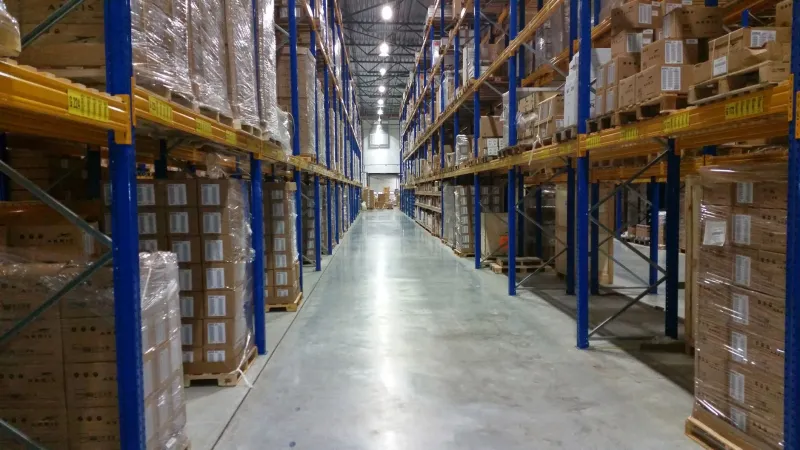
Consider a mid-sized industrial distributor in the Midwest purchasing a high-demand consumable product. The supplier offers a 12% discount for orders exceeding 10,000 units versus the standard 2,000-unit run. On paper, the savings are compelling. In practice, however, the distributor must now finance the full order upfront, lease additional rack space to accommodate the inventory, and assign staff hours to receiving, sorting, and cycle-counting the expanded stock.
None of those line items appear in the supplier's quote. All of them reduce the realized value of the discount.
This scenario repeats itself across product categories and company sizes. The discount is real, but it is calculated against the purchase price alone — not against the total cost of ownership for that inventory over the time it takes to sell through.
Four Cost Drivers That Erode Volume Savings
Storage and Facility Costs
Warehouse space in the United States is not free, and in many regions it has become considerably more expensive. Whether a business owns its facility or leases it, every square foot of floor space carries a cost that can be allocated per pallet, per cubic foot, or per unit. When a buyer commits to a volume that requires overflow storage, temporary leasing, or the displacement of faster-moving SKUs, the incremental storage cost must be factored directly against the discount received.
A useful rule of thumb: calculate your annual facility cost per square foot, then determine how much space the order will occupy and for how long. Multiply those figures together to produce a carrying cost estimate that can be compared directly to the discount value.
Handling and Labor
Large inbound shipments require receiving labor, quality inspection, put-away time, and often additional equipment such as forklifts or pallet jacks. For businesses operating lean warehouse teams, a single oversized order can create a labor bottleneck that disrupts normal operations for days. That disruption has a dollar value — and it belongs in the break-even calculation.
Obsolescence and Demand Risk
This is the cost driver most frequently underestimated by buyers who are focused on price. Products change. Customer preferences shift. Specifications are updated. Regulatory requirements evolve. Any bulk order that exceeds a realistic sell-through window carries obsolescence risk — the probability that some portion of the inventory will need to be marked down, liquidated, or written off entirely.
For businesses purchasing technology components, seasonal goods, or products with regulatory shelf lives, this risk can be substantial. A 12% discount means nothing if 15% of the order eventually sells at a 40% markdown.
Working Capital Drain
Perhaps the most insidious cost of over-commitment is the opportunity cost of capital. Cash tied up in excess inventory cannot be deployed elsewhere — it cannot fund marketing, equipment upgrades, payroll flexibility, or opportunistic purchases from other suppliers. For small and mid-sized businesses operating with limited credit lines, this constraint can be genuinely harmful.
Building a True Break-Even Framework
Before committing to any bulk order that exceeds standard replenishment quantities, procurement teams should work through the following calculation:
-
Establish the baseline discount value. Multiply the per-unit savings by the total units ordered. This is the maximum potential gain.
-
Estimate incremental storage cost. Calculate the space required, the duration of storage, and the per-square-foot cost. Subtract this from the discount value.
-
Quantify incremental labor. Estimate additional receiving, put-away, and management hours. Apply your fully-loaded labor rate and subtract.
-
Apply an obsolescence probability. Based on historical demand variability and product lifecycle, assign a percentage of the order that may not sell at full price. Calculate the expected markdown loss and subtract.
-
Assign a capital cost. Multiply the total order value by your cost of capital (or your effective borrowing rate) for the expected inventory duration. Subtract.
If the resulting figure is still positive, the bulk order may genuinely create value. If it approaches zero or turns negative, the discount is a false economy.
Practical Adjustments for Mid-Market Buyers
Rather than abandoning volume purchasing altogether, mid-market buyers can adopt several strategies that preserve discount access without over-committing capital.
Negotiate staged delivery schedules. Many suppliers will honor bulk pricing on a blanket purchase order while delivering inventory in smaller, scheduled releases. This approach captures the discount while distributing the carrying cost over time.
Align order quantities with documented demand data. Use actual sales velocity — not optimistic projections — to determine what volume can realistically be absorbed within a defined window. Conservative demand assumptions protect against the obsolescence trap.
Establish a maximum inventory duration policy. Some procurement teams implement a rule that no bulk order may exceed a defined number of days of forward coverage — commonly 60 to 90 days for most product categories. This policy creates a structural limit on over-commitment.
The Discipline of Honest Accounting
The false economy trap is not a supplier problem. Suppliers are doing exactly what buyers ask — offering incentives for larger commitments. The responsibility for evaluating those incentives accurately rests entirely with the purchasing organization.
Building that discipline requires a willingness to look beyond the invoice price and account for every dollar that a bulk order will consume before it generates revenue. It requires treating working capital as a real cost rather than an abstract concept. And it requires resisting the psychological appeal of a large discount number in favor of a more complete picture of value.
At BulkBridge Supply, we work with buyers across a wide range of industries who are navigating exactly these decisions. The most effective procurement teams are not necessarily those who buy the most — they are those who buy most intelligently, with a clear-eyed understanding of what every dollar of inventory truly costs to hold.