The Other Side of the Ledger: Converting Excess Inventory and Returned Goods Into a Measurable Revenue Stream
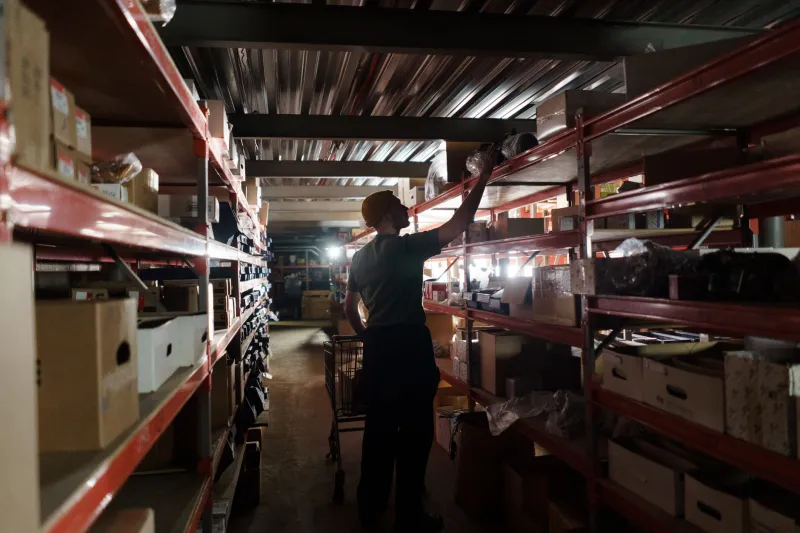
The procurement conversation in wholesale and industrial supply has long been focused on the front end: sourcing strategy, supplier qualification, pricing negotiation, and order timing. These are consequential disciplines, and the literature supporting them is extensive. What receives considerably less attention is the financial performance of inventory after it enters a warehouse—particularly when it accumulates beyond operational need or returns from customers in various states of condition and completeness.
For most wholesale operations, excess inventory and returned goods are managed as liabilities. They occupy warehouse space, tie up working capital, and eventually get written down. The assumption embedded in that approach is that these assets have lost most of their recoverable value. Increasingly, that assumption is being challenged by procurement and operations leaders who have built structured programs to extract meaningful financial return from the reverse side of their supply chain.
Why Reverse Logistics Has Historically Been Neglected
The neglect of reverse logistics in wholesale procurement is not accidental. It reflects several structural realities that have made the discipline difficult to prioritize.
First, reverse logistics activity is diffuse. Returns arrive unpredictably, in varying quantities, across multiple product categories and condition grades. Building a systematic process around that variability requires investment in infrastructure, personnel, and technology that most organizations have been reluctant to commit.
Second, the financial upside of reverse logistics is not immediately visible on a standard P&L. The cost of a return is typically captured as a credit memo or inventory write-down. The potential recovery value—through supplier buyback, secondary market sale, or parts reclamation—is not automatically visible in the same reporting framework. What is not measured is not managed.
Third, procurement and operations teams are typically evaluated on metrics that reward forward supply chain performance. On-time delivery, fill rates, and unit cost reduction are the benchmarks that drive compensation and recognition. Reverse logistics recovery rates are rarely on that scorecard.
The organizations that have overcome these structural barriers have done so by treating reverse logistics not as a cleanup function but as a distinct revenue-generating operation with its own metrics, resources, and strategic objectives.
Negotiating Return Rights Before the Purchase Order Is Signed
The most effective reverse logistics programs begin at the negotiation table, not in the returns dock. Procurement teams that treat return provisions as an afterthought—accepting whatever standard language a supplier proposes—are limiting their future recovery options before the first shipment arrives.
Sophisticated buyers negotiate return rights as a core element of their supply agreements. The specific provisions that matter most at bulk purchasing scale include:
Restocking Fee Caps
Many suppliers impose restocking fees on returned goods. These fees are negotiable, particularly for high-volume buyers whose business represents a meaningful portion of a supplier's revenue. Establishing a contractual cap on restocking fees—or eliminating them entirely for returns that meet defined condition and packaging standards—directly improves the economics of any future return transaction.
Supplier Buyback Programs
Some suppliers, particularly in categories such as electronics, industrial equipment, and branded consumer goods, maintain formal buyback programs for unsold inventory. Buyers who are aware of these programs and negotiate access to them as part of their initial agreement have a structured exit for overstock situations that would otherwise result in write-downs or distressed liquidation.
Condition Grading Standards
Returns that arrive without agreed condition grading criteria are subject to supplier discretion in determining their credit value. Negotiating explicit, documented grading standards—tied to defined credit percentages—removes that ambiguity and provides a predictable recovery framework.
Secondary Market Channels: An Underutilized Asset Recovery Tool
For excess inventory that cannot be returned to the original supplier, secondary market channels represent a meaningful recovery option that wholesale operations have historically been reluctant to pursue. The reluctance is often rooted in concern about brand impact, channel conflict, or the administrative complexity of managing secondary sales alongside primary operations.
Those concerns are legitimate, but they are manageable. A distribution company specializing in maintenance, repair, and operations (MRO) supplies in the Mid-Atlantic region developed a structured program for liquidating excess inventory through a dedicated secondary channel that operated independently of their primary customer base. By selling through an industrial surplus platform rather than their own sales team, they avoided channel conflict while recovering an average of 58 cents on the dollar for inventory that had previously been written down to approximately 15 cents on the dollar. Over 18 months, the program recovered more than $400,000 in inventory value that would otherwise have been recognized as a loss.
The key to that outcome was process discipline: consistent condition assessment, accurate product data, and a clear internal policy governing which inventory was eligible for secondary market disposition versus supplier return.
Building the Internal Infrastructure for Reverse Logistics Performance
A reverse logistics program that generates consistent financial return requires more than a policy document and a designated corner of the warehouse. The operational infrastructure necessary to support it includes the following elements.
Inventory Condition Assessment Protocol
Returned and excess goods must be evaluated systematically against documented condition standards before a recovery channel can be selected. This assessment function requires trained personnel, standardized criteria, and a workflow that moves product through evaluation efficiently rather than allowing it to accumulate unassessed.
Channel Selection Decision Tree
Not all excess inventory is best served by the same recovery channel. A decision framework that maps inventory condition, product category, and supplier agreement terms to appropriate disposition options—supplier return, buyback program, secondary market sale, parts reclamation, or disposal—improves both recovery rates and processing efficiency.
Financial Tracking Integration
Recovery activity needs to be tracked in a way that makes its financial contribution visible to leadership. This typically requires a modification to existing reporting frameworks to capture reverse logistics revenue as a distinct line item rather than burying it in inventory adjustments or miscellaneous credits.
Supplier Relationship Management for Returns
The supplier relationships that support forward procurement are the same relationships that govern the terms of returns and buybacks. Procurement teams that maintain active communication with supplier account managers about reverse logistics activity—rather than treating returns as a transactional exception—tend to negotiate better terms and receive more cooperative responses when return volumes are elevated.
The Strategic Reframe: Reverse Logistics as Risk Mitigation
Beyond the direct financial recovery, a well-structured reverse logistics program serves a strategic function in bulk procurement: it reduces the downside risk of forward purchasing decisions.
Buyers who know they have reliable return rights and secondary market options for excess inventory are better positioned to take advantage of bulk pricing opportunities, tariff windows, and volume discount tiers that would otherwise feel financially dangerous. The ability to recover value from overstock converts a potential liability into a manageable risk, which expands the range of purchasing strategies available to the procurement team.
In an environment where bulk buyers are consistently looking for every available lever to improve margin and manage working capital, the reverse side of the procurement cycle deserves the same analytical attention as the front end. The value is already in the warehouse. The question is whether the organization has built the infrastructure to capture it.