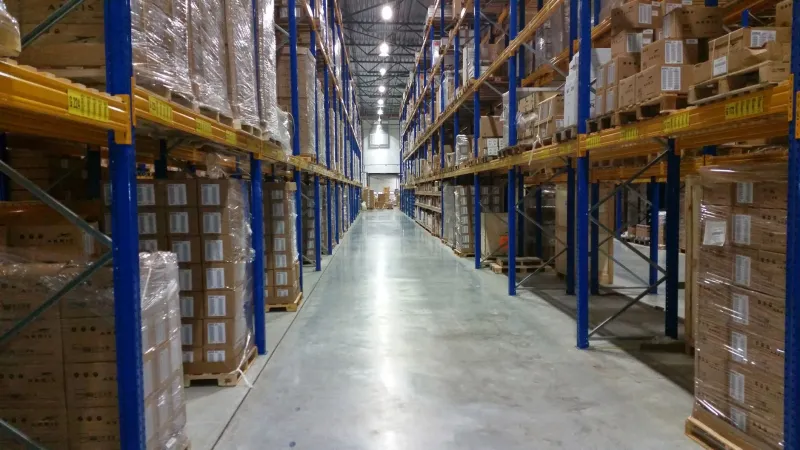
When More Becomes Less: The Hidden Financial Penalty of Overstocking at Wholesale Scale
There is a deeply ingrained assumption in wholesale procurement: volume is virtue. The more you buy, the lower your unit cost, and the lower your unit cost, the better your margins. This logic is not wrong — it simply is not complete. For a growing number of US businesses operating in competitive, fast-moving markets, the pursuit of maximum bulk savings has produced a secondary problem that rarely appears on a procurement dashboard: the compounding cost of carrying too much inventory.
Overstocking is not the same as overspending. That distinction matters. A procurement team can make a technically sound purchasing decision — securing a legitimate price break at a high volume threshold — and still generate a net financial loss once the full carrying cost equation is applied. Understanding where that equation breaks down is one of the more consequential skills a modern procurement professional can develop.
The True Cost of a Pallet That Doesn't Move
Most organizations track inventory value as an asset on the balance sheet. Fewer systematically track the cost of holding that asset over time. Industry benchmarks suggest that total inventory carrying costs — encompassing warehousing, insurance, capital cost, obsolescence risk, and shrinkage — typically range from 20% to 35% of inventory value per year, depending on the product category and storage conditions.
Applied to real numbers, the impact is significant. A bulk purchase of $200,000 in industrial fasteners, for example, carries an annual holding cost of between $40,000 and $70,000. If that inventory turns only once per year rather than the four times originally projected, the carrying cost per unit shipped climbs substantially — potentially eliminating the price break that justified the bulk order in the first place.
Category-Specific Obsolescence Risk
Not all overstocking carries equal risk. The financial penalty for excess inventory varies considerably by product type.
Consumables with expiration dates — cleaning chemicals, lubricants, certain adhesives — carry the most acute risk. Purchasing a 12-month supply of a product with an 18-month shelf life leaves almost no margin for demand variability. A slower-than-projected sales cycle or a product reformulation by the manufacturer can convert a bulk discount into a disposal expense.
Technology-adjacent products, including electronics components, cable assemblies, and control systems, face rapid obsolescence driven by specification changes. A bulk position in a component that becomes incompatible with a revised industry standard represents not just a carrying cost but a write-off.
Seasonal or trend-sensitive goods in the wholesale space — packaging materials tied to promotional cycles, safety equipment with changing regulatory requirements — can shift from high-demand to slow-moving within a single quarter.
Commodity staples such as corrugated boxes, pallet wrap, and standard fasteners carry the lowest obsolescence risk, making them the most defensible candidates for deep bulk purchasing strategies. Even here, however, storage space has an opportunity cost.
Working Capital Drag: The Invisible Competitor
Beyond carrying costs, excess inventory creates a working capital problem that affects the broader business. Every dollar tied up in warehouse inventory is a dollar unavailable for other strategic investments — whether that means funding a new product line, taking advantage of a time-sensitive purchasing opportunity, or simply maintaining operating flexibility during a revenue downturn.
For small and mid-sized distributors operating with constrained credit facilities, this drag is particularly acute. A business that has maximized its warehouse capacity with six months of forward inventory may find itself unable to respond when a supplier offers an exceptional spot pricing opportunity on a complementary product category.
A Decision Framework for Optimal Order Quantities
Determining the right order quantity requires moving beyond the price break schedule and incorporating a more complete set of variables. The following decision framework provides a structured approach.
Step 1: Establish a Realistic Demand Baseline
Begin with historical consumption data — ideally 12 to 24 months — adjusted for known demand drivers such as seasonality, customer growth, or contract changes. Avoid projecting future demand based on aspirational sales targets rather than historical patterns.
Step 2: Calculate Your True Carrying Cost Rate
Do not rely on industry averages. Calculate your organization's actual carrying cost rate by aggregating:
- Warehouse lease cost per square foot, allocated by inventory footprint
- Insurance cost per unit of inventory value
- Cost of capital (either interest rate on financing or opportunity cost of equity)
- Historical shrinkage and obsolescence write-off rate
Step 3: Model the Break-Even Volume
For any given bulk discount, calculate the volume at which the price savings exactly offset the incremental carrying cost of holding the additional inventory. Orders above that break-even threshold generate a net cost, not a net saving.
Step 4: Apply a Demand Confidence Adjustment
For products with high demand variability or short shelf lives, apply a conservative confidence multiplier to your demand baseline before committing to a volume tier. A product with 30% demand variability warrants a more conservative position than a stable commodity.
How Data-Driven Modeling Is Changing the Calculus
Leading wholesale buyers are increasingly deploying inventory optimization platforms that automate much of this analysis. By integrating point-of-sale data, supplier lead time records, and carrying cost parameters, these systems generate dynamic reorder recommendations that balance price efficiency against holding cost in real time.
The shift is meaningful. Organizations that previously set reorder points based on purchasing intuition or simple rule-of-thumb formulas are discovering that algorithmic models consistently identify lower-cost inventory positions — not by buying less, but by buying at the right time and in the right quantity.
At BulkBridge Supply, the most effective wholesale buyers we work with share a common characteristic: they treat the decision to buy in bulk as a financial modeling exercise, not a reflexive response to a price break. Volume purchasing remains one of the most powerful cost levers available to US distributors and industrial buyers. The discipline lies in knowing exactly how much volume the numbers actually support.