Buy in the Quiet: How Strategic Off-Season Procurement Is Funding Operations for US Wholesale Buyers
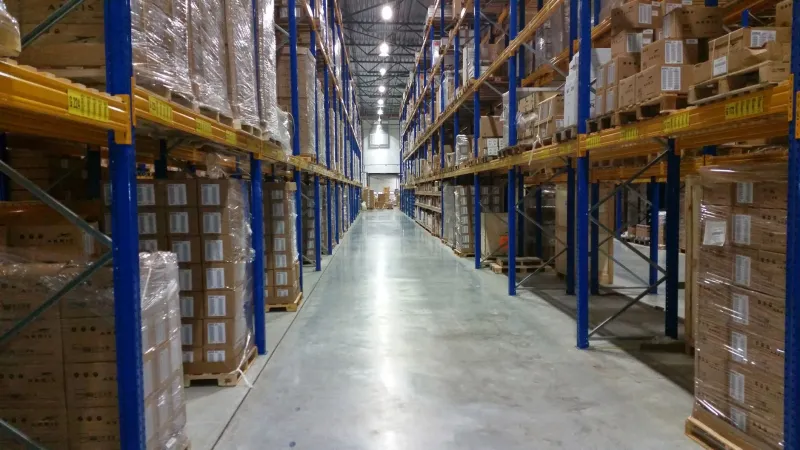
Photo: warehouse bulk inventory storage seasonal supply chain, via www.emizainc.com
Pricing in wholesale markets is rarely flat across the calendar year. Suppliers face their own demand cycles, production schedules, and inventory carrying pressures — and those pressures create predictable windows during which per-unit costs drop, minimum order quantities soften, and lead times shorten. US bulk buyers who recognize these windows and plan their purchasing around them consistently achieve lower total landed costs than buyers who procure reactively, close to the point of need.
This practice — often described as seasonal procurement arbitrage — is not complicated in concept. Buy when prices are low; sell or consume when demand is high. The complexity lies in execution: accurate forecasting, warehouse capacity management, working capital allocation, and contract structures that accommodate volume variability without penalty. Each of these elements requires deliberate attention if the strategy is to generate reliable financial returns rather than simply shift costs from the invoice line to the storage and financing lines.
Understanding Why Off-Season Pricing Windows Exist
To exploit a pricing window effectively, it helps to understand what creates it. Suppliers in most industrial and wholesale categories face periods of reduced order flow — periods when production capacity is underutilized and finished goods inventory is accumulating. During these intervals, the economics of a discounted sale to a volume buyer often look attractive from the supplier's perspective: it reduces carrying costs, keeps production lines running, and maintains the supplier relationship without requiring a permanent price reduction.
For seasonal consumer goods categories — outdoor equipment, HVAC components, lawn and garden products, holiday merchandise, and agricultural supplies, among others — these troughs are relatively predictable and have been consistent across multiple market cycles. For industrial categories, the patterns are less obvious but still present: construction-related materials often soften in late autumn; certain packaging materials see demand drop between major retail seasons; commodity-adjacent products track raw material cycles that have their own seasonal rhythms.
Buyers who have tracked their category's pricing history over two to three years typically find that off-season discounts of 8% to 22% are achievable on a consistent basis. At high purchase volumes, that range translates to material savings per fiscal year.
The Forecasting Foundation
Seasonal procurement arbitrage fails most often at the forecasting stage. Buyers who purchase aggressively during a low-price window and subsequently discover they have over-bought — or bought the wrong product mix — convert a pricing advantage into an inventory liability. Excess stock generates carrying costs, ties up working capital, and in some categories creates obsolescence risk if specifications change before the product is consumed.
Effective demand forecasting for this strategy requires more than reviewing last year's sales data. It requires segmenting demand by SKU, accounting for trend lines (is the category growing, stable, or contracting?), and stress-testing the forecast against realistic downside scenarios. A buyer who is 15% optimistic about demand and purchases accordingly may find that the carrying cost of the excess inventory erodes a significant portion of the per-unit savings.
Practical guardrails include:
- Purchasing to the midpoint of the forecast range, not the optimistic ceiling, on initial off-season orders
- Reserving a portion of the planned budget for a secondary purchase if early-season demand confirms or exceeds the forecast
- Excluding slow-moving SKUs from seasonal front-loading unless historical data shows consistent velocity
Warehouse Capacity as a Strategic Input
Off-season bulk purchasing requires storage capacity, and storage capacity has a cost. Any analysis of seasonal arbitrage savings must account honestly for the incremental warehousing expense associated with holding inventory for an extended period before it is consumed or sold.
For buyers who operate their own warehouse space, the relevant question is whether the existing footprint can absorb the additional volume without displacing other inventory or creating operational inefficiencies. For buyers who rely on third-party logistics providers, additional storage will carry a direct cost that should be modeled against the per-unit savings before committing to the purchase volume.
In some cases, the most cost-effective approach is a hybrid: purchase the maximum volume that existing warehouse capacity can absorb without additional cost, and evaluate whether the marginal savings on additional volume justify the marginal storage expense. This calculation changes depending on the size of the per-unit discount, the duration of the storage period, and the prevailing cost of third-party warehouse space in the relevant market.
Structuring Purchase Agreements for Seasonal Flexibility
One of the more nuanced challenges of seasonal procurement arbitrage is negotiating supply agreements that accommodate the inherent lumpiness of this purchasing pattern. A supplier who expects a relatively even order flow across the year may be reluctant to accept a contract that concentrates volume in one or two quarters and goes quiet during the others.
The most effective approach is to frame the seasonal concentration as a benefit to the supplier — which, in many cases, it genuinely is. An off-season commitment from a volume buyer helps the supplier manage production scheduling, reduce finished goods inventory, and improve cash flow during a period when order flow from other customers has slowed.
Key contractual provisions worth negotiating in this context include:
- Volume commitment ranges (rather than fixed quantities) that allow the buyer to adjust order size within an agreed band without triggering penalty clauses
- Pricing locks that fix the off-season rate for the duration of the agreement, protecting the buyer if market prices rise before the full volume is ordered
- Delivery scheduling flexibility that allows the buyer to take shipments in tranches over several weeks rather than in a single delivery that strains receiving and storage operations
Working Capital Considerations
Front-loading inventory purchases requires capital earlier in the fiscal cycle than reactive procurement does. For buyers who are working within tight liquidity constraints, this can be a limiting factor — even when the economics of the strategy are compelling.
Several mechanisms can ease this tension. Extended payment terms negotiated with the supplier effectively defer the cash outlay, sometimes long enough to align with the period when the inventory begins generating revenue. Inventory financing arrangements with a lender, using the purchased stock as collateral, provide another avenue. In some cases, buyers who have established strong supplier relationships can negotiate consignment-style arrangements for a portion of the off-season volume, taking title — and incurring the payment obligation — only as inventory is drawn down.
The key discipline is ensuring that the working capital cost of the strategy — whether expressed as interest expense, opportunity cost, or deferred payment fees — is included in the total cost comparison against reactive in-season purchasing.
Making the Strategy Repeatable
The buyers who extract the most consistent value from seasonal procurement arbitrage are those who treat it as a structured annual process rather than an opportunistic one-time move. This means building the forecasting review, the supplier outreach, the warehouse capacity assessment, and the working capital planning into a defined calendar — typically beginning four to six months before the target off-season purchasing window.
Over time, this process accumulates institutional knowledge: which suppliers are most receptive to off-season volume discussions, which product categories offer the most reliable pricing troughs, and which forecasting inputs have proven most predictive of actual demand. That knowledge compounds. Each cycle of the strategy generates data that makes the next cycle more precise — and more profitable.