Before the Rate Quote, Read the Code: How Freight Classification Errors Drain Bulk Savings Into the Trailer Void
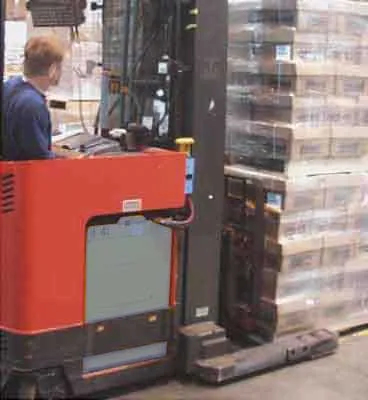
Photo: Unknown, Public domain, via Wikimedia Commons
Every procurement team celebrates the unit-price win. Fewer teams celebrate the freight class code — and that oversight is quietly absorbing a meaningful share of the savings American bulk buyers think they've negotiated.
The National Motor Freight Classification (NMFC) system assigns commodities to one of eighteen classes, from 50 to 500, based on density, stowability, handling, and liability. The difference between adjacent classes can add hundreds of dollars to a single less-than-truckload (LTL) shipment. Multiply that across a year of high-volume purchasing and the arithmetic becomes uncomfortable.
Where the Money Leaks
Most classification errors trace back to three places: a wrong NMFC item number entered at booking, a density calculation based on inaccurate dimensions, and pallet configurations that create avoidable handling penalties. Carriers audit aggressively — and they should, since reclassification and reweigh fees are a legitimate revenue stream. When your shipment gets re-rated, you pay the corrected rate plus an administrative fee, and your carefully modeled landed cost evaporates.
A Tale of Two Buyers
Consider two distributors in the same region, each purchasing 40 pallets of identical polypropylene injection-molded bins — 24,000 units total — at the same negotiated price of $4.80 per unit, or $115,200 in product cost.
Buyer A ships on standard 48x40 pallets, loading bins loosely so each pallet measures 55 inches tall and weighs 620 pounds. That density (~2.7 pounds per cubic foot) pushes the freight into NMFC Class 175. At roughly $0.42 per pound for a 1,200-mile LTL move, the freight bill lands near $0.11–$0.13 per unit equivalent. Worse, an initial booking error listed the commodity under a generic "plastic articles" code at Class 250, triggering a reclassification audit, a $285 re-rate fee, and a two-day delivery delay that forced a partial air-freight rescue at $1,100.
Buyer B negotiated the identical product price but did three things differently. First, the team confirmed the correct NMFC item with the carrier in writing before the first pickup. Second, they reconfigured loads — heavier, denser pallets at 68 inches and 940 pounds, achieving nearly 4.1 pounds per cubic foot and qualifying for Class 92.5. Third, they consolidated into a single volume LTL quote rather than spot-booking individual shipments.
The result: Buyer B's effective freight cost dropped to roughly $0.06 per unit equivalent, with no audit fees and no expedite charges. Across the order, the spread between the two buyers' total landed cost exceeded 14% — more than the entire negotiated discount most bulk buyers fight for in annual sourcing rounds.
Building Classification Competence In-House
The fix isn't expensive; it's procedural.
Measure what actually ships. Densities should be calculated from real, weighed, taped pallets — not spec-sheet dimensions. Recalculate whenever packaging or pallet patterns change.
Get the NMFC number in writing. A short email confirming the commodity code and class before your first shipment creates a paper trail that shuts down most re-rate disputes.
Design pallets for density. Sometimes a taller stack, a different pallet size, or removing void fill moves you down two full classes. Run the math before you run the truck.
Consolidate intelligently. Volume LTL and partial truckload programs reward shippers who can aggregate freight on predictable schedules — a natural fit for bulk purchasing rhythms.
The Procurement Mindset Shift
Landed cost, not invoice cost, is the number that matters. A buyer who saves 3% on product but ships at the wrong class has funded the carrier's margin with the supplier's concession. Treat freight classification as a procurement deliverable, not a warehouse afterthought, and the discount you negotiated finally becomes the discount you keep.